
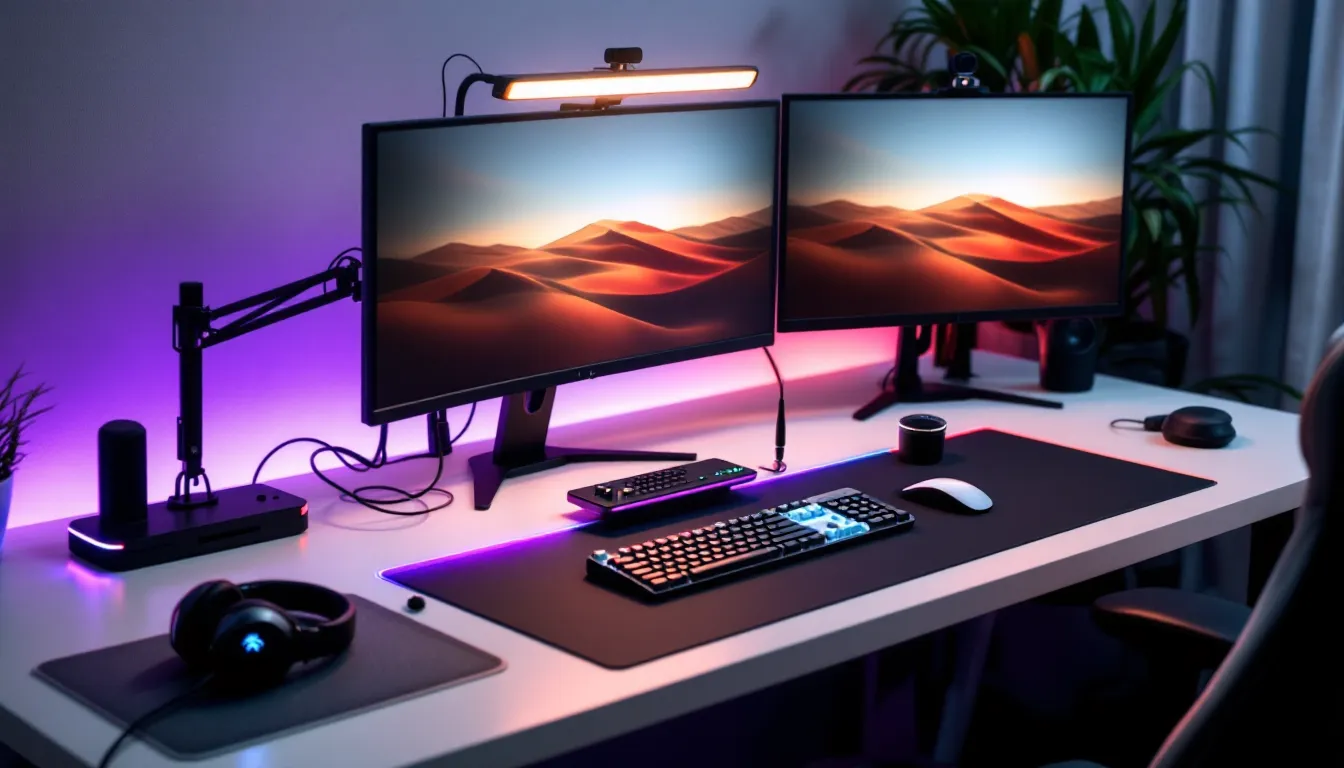
Elgato has quietly become the behind-the-scenes standard for competitive gamers and content creators. Walk into any esports facility, streaming studio, or pro player’s setup, and you’ll see their gear everywhere, though not always the flashy stuff. From precision mice to intelligent lighting systems, Elgato makes the tools that sit between intention and execution. Whether you’re climbing ranked ladders, streaming to thousands, or just trying to squeeze extra frames per second out of your rig, understanding what Elgato offers matters. This guide breaks down the actual gear worth considering in 2026, the specific platforms they work with, and how to assemble a setup that doesn’t waste money on features you’ll never use.
Key Takeaways
- Elgato gaming peripherals are trusted by professional esports players and streamers because they deliver reliable performance, clean software, and strong ecosystem integration across PC, PlayStation 5, and Xbox Series X|S.
- The OP1 8K mouse with 8000 Hz polling rate offers four times faster sensor reporting than standard competitive mice, providing a measurable edge for high-refresh esports titles like Counter-Strike 2 and Valorant.
- Stream Deck is Elgato’s flagship automation tool for content creators, enabling complex scene switching, lighting adjustments, and audio control with single button presses—critical for professional streaming quality.
- Elgato’s Key Light and lighting solutions prioritize functional fill light with accurate color rendering for on-camera streaming, differentiating them from pure RGB-focused gaming brands.
- A complete Elgato gaming setup costs $1,200–$2,000 and scales with your needs: competitive gamers should prioritize latency-sensitive gear first, while streamers should invest in Stream Deck and lighting early.
What Is Elgato and Why Gamers Trust the Brand
Elgato, owned by Corsair since 2018, started as a streaming accessory company and evolved into a comprehensive hardware ecosystem. The brand isn’t household-name famous like Razer or SteelSeries, but it commands respect in competitive gaming circles and streaming communities for a specific reason: the gear works reliably without excessive marketing noise.
The trust builds from consistency. Elgato products ship with clean software, minimal bloatware, and hardware that doesn’t make you regret the purchase six months later. Pro players and streamers use Elgato gear because it integrates well, performs measurably, and doesn’t fail during critical moments. You won’t find many “budget” Elgato products, they position themselves in the mid-to-premium range, which means they cut corners less aggressively than budget brands and charge less than aspirational luxury lines.
One key advantage: ecosystem integration. If you own one Elgato device, adding others becomes simpler. Stream Deck controls your Key Light. Your mouse integrates with your keyboard’s software. Control schemes layer across devices. This interconnectedness saves setup time and mental overhead, both critical when you’re grinding ranked or managing a stream.
Elgato’s manufacturing footprint spans PC, PlayStation 5, Xbox Series X
|
S, and select mobile platforms. They don’t make every type of gaming peripheral (no GPUs, no RAM, minimal speakers), but what they do make tends to occupy the intersection of necessity and quality that competitive gamers actually want.
Essential Elgato Peripherals for Competitive Gaming
The foundation of any gaming setup isn’t flashy, it’s responsive, reliable, and tuned to your playstyle. Elgato’s peripheral lineup covers the basics that matter.
Elgato Gaming Mice and Precision Performance
Elgato offers two primary gaming mice: the OP1 8K and the OP1 (standard). The critical difference is sensor speed. The OP1 8K polls at 8000 Hz, which means it reports its position to your computer 8000 times per second. That’s four times faster than the 2000 Hz standard most competitive mice use. For games with tight TTK windows like Counter-Strike 2 or Valorant, this matters, though the practical edge diminishes if your reflexes aren’t already sharper than most.
Both mice use the PixArt PAW3395 sensor, capable of 32,000 DPI with zero acceleration and consistent tracking across surfaces. The shape is ergonomic, right-hand focused, and lighter than older Elgato mice. Weight sits around 69 grams (OP1) to 75 grams (OP1 8K), which is competitive class without hitting ultra-lightweight territory.
Compatibility spans PC, PS5, and Xbox Series X
|
S. Mobile gaming isn’t supported.
For most competitive players, the standard OP1 delivers everything you need at a lower price point. The 8K variant appeals to esports players with hardware capable of 240+ fps and the muscle memory to exploit minor latency reductions. Pro player settings across titles show no universal preference, though both mice appear in professional setups, a sign the hardware doesn’t bottleneck performance.
Elgato Keyboards for Speed and Reliability
Elgato’s keyboard offering is narrower: the Wave:3 (mechanical) and Wave (membrane). The Wave:3 uses mechanical switches with a 1ms response time and supports programmable macros. Available in full-size and tenkeyless layouts, it includes a soft palm rest and wrist support, comfort matters during eight-hour grinding sessions.
Switch options include hyper-click red and linear black variants. Reds are tactile without the high-pitched sound: blacks are smooth and linear. Neither has the aggressive clickiness of Cherry MX Blue switches, keeping noise manageable in shared spaces.
The Wave (membrane) is for budget-conscious gamers. It’s lighter, quieter, and requires less key pressure. Not ideal for fighting games or rhythm games where switch feedback matters, but perfectly adequate for shooting games and strategy titles.
Both keyboards have USB passthrough, programmable macro keys, and mechanical durability rated for 50 million keypresses. No wireless option exists, these are wired devices.
Headsets and Audio Quality
Elgato’s Wave:3 and Wave:1 headsets are made in partnership with audio companies and tuned specifically for competitive titles. The Wave:3 features drivers tuned for directional audio (critical in shooters for pinpointing enemy footsteps) and a detachable mic. Impedance is 32 ohms, which plays nicely with consoles and PC without requiring external amplification.
The Wave:1 is the previous generation, still available and cheaper, though the Wave:3 brings improvements in comfort and cable routing. Neither headset has active noise cancellation, they’re open or semi-open designs that let you hear external audio, which appeals to players who want awareness of their physical environment.
Both connect via 3.5mm analog jack or USB (depending on version), making them compatible across PC, Mac, PlayStation, and Xbox platforms. Wireless is not available. Sound profile leans neutral with slight treble boost, which amplifies high-frequency details like gunfire and ability activation sounds.
Elgato Stream Deck and Content Creation Tools
Stream Deck is Elgato’s flagship innovation. It’s a small programmable keyboard that lets you trigger complex actions, scene switches, audio muting, clip recording, chat alerts, with a single button press. No shortcuts, no memory overhead. Press the button, action executes.
Streamlining Your Setup with Stream Deck
The current lineup includes the Stream Deck +, Stream Deck MK.2, and Stream Deck Mini. The differences are button count and features. The Stream Deck + has 32 buttons arranged in an 8×4 grid, includes a built-in touch strip for volume/scene fading, and supports profiles so different games or apps can have completely different button layouts. The MK.2 has 15 buttons and represents the standard model. The Mini has 6 buttons and targets mobile streamers or producers who need something compact.
Compatibility includes PC, Mac, and browsers. iOS and Android support exists but is limited compared to desktop streaming software. If you’re serious about streaming, desktop is where Stream Deck shines.
Price ranges from $100 (Mini) to $250 (Stream Deck +). For context, professional esports streamers and content creators rely heavily on Stream Deck automation to manage production quality without a dedicated operator.
Setup requires no specialized knowledge. Install the app, customize buttons through a drag-and-drop interface, assign actions. Buttons are hotswappable keycaps, so customization goes visual, you can apply unique key labels, use GIFs, or display live data like chat count or CPU usage.
Lighting and Camera Integration
Stream Deck connects to Elgato’s broader ecosystem, particularly lights and cameras. Press a button to trigger a scene that dims your Key Light, switches your Facecam, and adjusts your Ring Light brightness simultaneously. This automation is the real power, not the button press itself, but the entire environment responding to a single command.
For camera integration, Elgato’s Facecam pairs directly with Stream Deck, allowing one-button switching between webcam and Facecam, auto-framing, and background blur without external software overhead. It’s not the only quality webcam available, but the integration with Elgato’s ecosystem is seamless compared to generic USB cameras.
Elgato Lighting Solutions and RGB Aesthetics
Lighting in a gaming setup serves dual purposes: aesthetics and functional fill light for streaming or content. Elgato’s lighting line is extensive and designed specifically for these dual requirements.
Key Light and Key Light Air
The Key Light is Elgato’s flagship. It’s a large rectangular panel with 2,800 lumens output (at full brightness), adjustable color temperature from 2,700K to 6,500K, and perfect white rendering for on-camera appearance. The panel mounts on an articulated arm and angles to provide soft, even light without harsh shadows, essential if you’re streaming or recording content.
The Key Light Air is the lighter, more affordable version. Slightly less bright (2,200 lumens), similar color range, and smaller form factor. For typical desk setups, the Air’s brightness is sufficient. The Key Light is for larger rooms or setups where multiple lights run simultaneously.
Both connect via USB-C and integrate with Stream Deck. One button can set the light to a specific temperature and brightness. Video tutorials, streaming software, and professional color grading software can trigger preset lighting adjustments.
Power consumption is notable: the Key Light draws 55W at full brightness. If power management is a consideration, the Air uses 35W.
Ring Light and Portable Options
The Ring Light is Elgato’s curved lighting solution, designed for dual-monitor setups or when you need even, gap-less front lighting. It’s useful for selfie-style framing or when your camera sits between two monitors. 1,600 lumens output, USB-powered, with manual dial adjustment for brightness and color temperature.
For portable gaming setups or LAN events, Elgato offers the Light Strip series, addressable RGB strips that adhere to monitor bezels or desk edges. They’re more aesthetic than functionally bright, but they integrate with Stream Deck and provide visual ambiance. Gaming setups that prioritize mood over practical lighting often opt for these.
Compare Elgato’s approach to traditional gaming lighting solutions, which often focus purely on RGB colors. Elgato emphasizes actual light output and color accuracy because their primary market is creators who need functional fill light, not just LEDs. This philosophy separates their lighting from brands that prioritize visual flash.
Building Your Ideal Gaming Setup with Elgato
Assembling an Elgato-centric setup requires understanding your platform and use case. One-size-fits-all recommendations fail because PC gaming, console gaming, and streaming have different bottleneck priorities.
PC Gaming Configurations
PC gamers building around Elgato should prioritize the OP1 8K mouse, Wave:3 mechanical keyboard, and Wave:3 headset. Add a Stream Deck MK.2 or Stream Deck + if recording or streaming. This configuration costs around $600-800 and covers peripherals that directly affect in-game performance.
For lighting, decide whether streaming is part of your plan. If yes, a Key Light is a smart investment because it solves technical problems (even on-camera lighting) while looking intentional. If pure gaming with no streaming, aesthetic RGB (monitor backlights, desk strips) suffices.
PC configurations benefit most from the full Elgato ecosystem because software integrations (lighting tied to game events, Stream Deck launching applications) leverage the operating system’s flexibility.
Console Gaming and Multi-Platform Compatibility
Console gamers, PS5 and Xbox Series X
|
S, have a narrower Elgato ecosystem. Mice and keyboards work, but many console shooters don’t support mouse input natively. The OP1 and Wave keyboards function as generic USB inputs, so they work on console but don’t gain advantage because console games enforce controller usage.
Headsets are the primary accessory advantage. The Wave:3 headset works across all platforms without platform-specific configuration. Same with the Wave:3 keyboard (if your console game supports it).
Console players streaming their gameplay benefit hugely from Stream Deck because the console can’t manage scene switching or audio adjustment independently. One button on Stream Deck controls the entire production, a critical difference in stream quality.
Lighting considerations are similar to PC: functional if streaming, optional if not.
Elgato Accessories That Boost Performance
Beyond core peripherals, Elgato offers supporting hardware that doesn’t directly affect gameplay but dramatically improves setup quality and longevity.
Cooling and Cable Management
Elgato’s Wave Nano is a small, quiet desk fan designed to keep equipment cool without noise pollution. For setups with multiple lights, Stream Decks, and powered peripherals running simultaneously, passive cooling is insufficient. The Nano moves air quietly (critical during streaming) and operates on USB power.
Cable management is often overlooked until your desk looks like a nest of wires. Elgato sells Cable Management Clips and Adjustable Cable Sleeves that consolidate wires behind your monitors or along desk edges. Not exciting, but dramatically improves the physical quality of your space and prevents accidental cable disconnects during intense gaming sessions.
Monitor Arms and Desk Organization
While Elgato doesn’t manufacture monitor arms, their mounting systems (for lights and cameras) require stable desk real estate. Pairing an Elgato light with a quality monitor arm reviewed by professional hardware outlets optimizes your vertical space and frees up desktop area for keyboards, mouse space, and content.
Elgato’s Multi Mount (sold separately) allows you to attach multiple Elgato accessories to a single articulating arm, reducing footprint and increasing flexibility. Useful if you’re running Key Light + Facecam + Ring Light in a compact space.
Desk organization ties directly to performance. Cluttered desks increase mouse latency (less space for flick movements), cause cables to tangle and disconnect, and reduce visibility during streaming. The boring accessories, mounts, sleeves, clips, are where casual setups become professional ones.
Conclusion
Elgato’s strength isn’t flashiness, it’s ecosystem coherence and professional-grade reliability at mid-tier pricing. A complete Elgato setup costs between $1,200-$2,000 depending on your ambitions, platform, and whether you’re streaming. Compare that to building equivalent quality across different brands, and Elgato’s integration advantage becomes clear.
Start with core peripherals (mouse, keyboard, headset) and expand based on use case. Streamers should prioritize Stream Deck and lighting early. Competitive gamers should focus on latency-sensitive gear first. Console players should invest in headsets and multi-platform peripherals. The brand scales with your ambitions, add complexity only when you need it.
Elgato won’t make you a better gamer. Gear optimization matters only after fundamentals are locked (sensitivity, crosshair placement, positioning). But if you’re already grinding hard, the peripherals eliminate distractions, reduce setup friction, and let you focus entirely on gameplay. That’s why pros use them.