
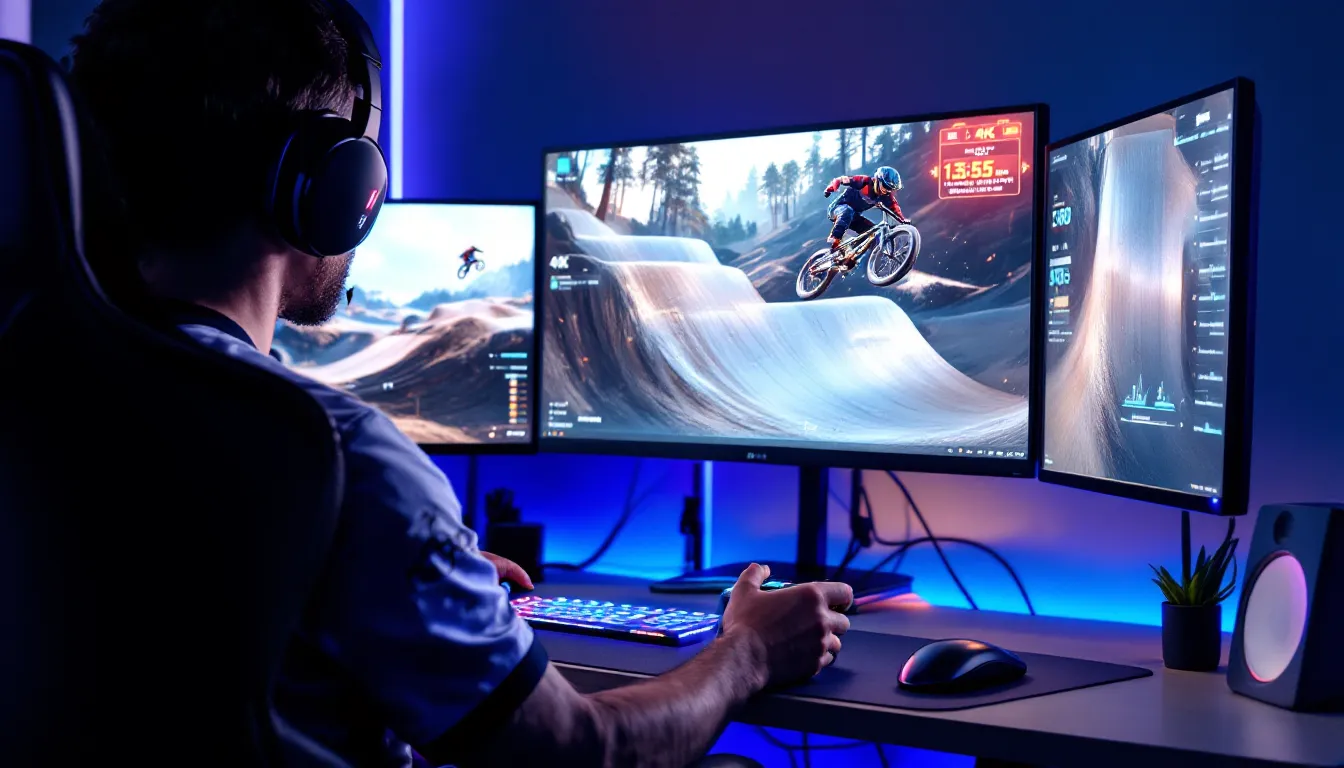
BMX racing games have exploded in popularity over the past few years, offering everything from hyper-realistic simulations to arcade-style chaos that captures the adrenaline rush of competitive BMX. Whether you’re a casual player looking to kill some time or a hardcore competitor hunting for tournament credentials, the BMX racing game landscape in 2026 is deeper and more varied than ever. The genre has matured significantly, with developers nailing the mechanics that matter: responsive controls, genuine physics, and customization that lets you build the bike and rider of your dreams. If you’re wondering which BMX racing games are actually worth your time, and which ones nail the experience, this guide cuts through the noise and delivers the specifics you need.
Key Takeaways
- BMX racing games in 2026 offer diverse experiences ranging from arcade-style chaos to hyper-realistic simulations, with titles like BMX Pro Legends dominating competitive esports and drawing 150,000+ concurrent viewers.
- The genre has matured significantly with responsive controls, genuine physics engines, and mechanical customization that directly affects bike performance, making BMX racing games legitimate platforms for competitive play.
- Modern BMX racing games now feature cross-platform ranked matchmaking, seasonal content, and live-service updates that keep the meta fresh, with monthly balance patches influencing competitive loadouts.
- Players should choose between simulation-heavy titles for competitive esports or arcade-leaning games for casual fun, with hybrid options offering assist toggles to bridge both playstyles for learners.
- The esports ecosystem is thriving with official circuits offering prize pools up to $50,000+, Discord communities of 50,000+ members, and accessible entry points through in-game ranked systems for aspiring pros.
- Mobile BMX racing games have become surprisingly sophisticated with touch-based controls and fair monetization, making the genre accessible across PC, console, and mobile platforms for the first time.
Why BMX Racing Games Have Become a Gaming Phenomenon
BMX racing games hit differently than most other racing titles. They’re rooted in real-world discipline, the same one that’s been part of the Olympics since 2020, which lends authenticity and prestige to digital versions. The esports scene around BMX games has grown massively, with sponsored leagues drawing thousands of viewers and distributing real prize pools. Studios have figured out what makes BMX compelling: the blend of technical skill, split-second timing, and flair. You’re not just chasing lap times: you’re landing tricks, managing line choices, and reading opponents’ movements in real-time.
The nostalgia factor matters too. Players who grew up with classics like Dave Mirra Freestyle BMX have a soft spot for the genre, and modern titles are delivering the progression systems and online infrastructure those early games could only dream of. MMOs and live-service elements have crept in, transforming BMX games from single-player diversions into persistent online communities where your reputation and rider rank actually mean something. Accessibility has improved as well, you don’t need a gaming PC or latest-gen console to jump in anymore. Mobile BMX titles are genuinely playable, and cross-platform progress is becoming standard.
The Evolution of BMX Games: From Arcade Classics to Modern Simulators
The BMX gaming timeline tells an interesting story about how drastically technology and game design philosophy have shifted. Dave Mirra Freestyle BMX (2000, PlayStation/Dreamcast) set the template for everything that followed: pick a rider, chain tricks, nail combos, and rise through rankings. That arcade simplicity worked beautifully, and sequels dominated the early 2000s. The physics were forgiving, sometimes laughably so, but the joy of stringing together ridiculous combo chains made it pure fun.
By the early 2010s, studios started experimenting with more grounded simulation approaches. Titles began incorporating real-world physics engines, actual bike geometries, and track layouts based on genuine BMX venues. Customization shifted from cosmetic tweaks to affecting actual performance: frame weight, wheel diameter, seat height, and handlebar rise now mattered mechanically, mirroring how real BMX riders dial in their setups.
The modern era, from 2020 onward, has solidified BMX games as a legitimate competitive platform. Today’s titles feature licensed riders, partnerships with real BMX organizations, dynamic weather systems, and matchmaking algorithms that would fit right into a traditional esports title. Graphics have caught up with expectations: you can see individual tire treads, mud splatter on frames during off-road sections, and rider animations that capture authentic techniques. The shift toward simulation hasn’t killed the arcade appeal either: the best modern BMX games nail both, letting you toggle difficulty, physics strictness, and assist settings to suit your preference.
Top BMX Racing Games to Play Right Now
PC and Console Standouts
BMX Pro Legends (PC, PS5, Xbox Series X
|
S) dominates the conversation in 2026. Released in late 2024 and continuously updated, it combines tight mechanics with a thriving competitive scene. The game runs at 4K/120fps on Series X and uses a sophisticated physics engine that rewards precise timing. Cross-platform ranked matchmaking means you’ll find competitive games regardless of your platform, and the seasonal content keeps the meta fresh.
Pro Legends uses a comprehensive trick system where inputs matter, analog stick timing determines rotation speed and landing stability. The TTK (time-to-completion) on tracks varies from three minutes on beginner circuits to eight-plus minutes on endurance races. Customization is deep: you can adjust suspension stiffness, gearing ratios, and seat position, with each affecting acceleration and handling characteristics.
Urban BMX Insanity (PC, PlayStation 4/5) leans harder into arcade sensibilities while maintaining solid track physics. It’s more forgiving than Pro Legends, making it ideal for newcomers, but the skill ceiling is still high. The game features trick-heavy gameplay where chaining tail whips, bunny hops, and 180 rotations builds momentum multipliers. Online lobbies are active on PC and run smoothly on PS5 with 60fps stability.
Street BMX 2026 (PC, Xbox) focuses on street and park riding over circuit racing. This one prioritizes creative line choice and improvisation. The sandbox-style track design means there’s rarely a “correct” racing line, you forge your own based on momentum, available features, and preferred trick setup. It’s less about competitive ranking and more about personal progression and style expression.
For console exclusives, PlayStation’s Ride the Line (PS5 exclusive) stands out as a cinematic, story-driven BMX experience. It’s not pure racing: it’s a narrative-heavy sports drama where you play as a young rider climbing from local circuits to international competition. The racing sections are solid, but the appeal is the character development and branching story paths.
Mobile BMX Games Worth Your Time
BMX Underground Mobile (iOS/Android) has become surprisingly sophisticated. Launched in 2023, it’s optimized for touch controls in a way that actually works. You don’t need a controller, the responsive touchscreen mechanics handle trick execution and steering intuitively. The monetization is fair: you can absolutely grind through free, though battle passes accelerate progression.
Pocket BMX Racing (iOS) is lighter on specs, running smoothly on mid-range phones. It’s more casual than competitive, emphasizing style over split-second timing. Sessions are short (2-4 minutes), making it perfect for transit or waiting rooms. The art style is charming, borderline chibi proportions but it works for the vibe.
BMX Master (Android-first, iOS launch 2025) just hit 5 million downloads. It integrates lean multiplayer features: asynchronous challenges against friends’ ghost data, weekly leaderboards, and seasonal rewards. The monetization leans toward cosmetics, which keeps gameplay balanced.
Mobile BMX games have a shorter action window than console counterparts, races run 2-6 minutes versus 4-10 on console. This isn’t a limitation: it’s deliberate design for the platform. Many competitive players use mobile titles to warm up before ranked console sessions.
Indie Gems You Shouldn’t Overlook
Dirt Drift Dreams (PC via Steam, $12.99) is a passion project from a two-person studio that somehow nailed BMX physics better than some AAA attempts. It’s minimalist visually, low-poly models, simple track designs, but the mechanical depth is genuine. Track editor included, and the community has generated thousands of custom courses. You’ll find playable tracks mirroring real BMX venues like Cologne, Las Vegas, and Fort Worth.
Ramp Masters Unlimited (PC/Mac) focuses specifically on park and ramp riding. No circuit racing: just you, concrete, and the laws of physics. The vibe is chill: there’s no ranking system or tournament pressure. It’s pure creative expression, and honestly, it’s refreshing. Frequently discounted during Steam sales, often hitting $7-8.
Retro BMX Arcade (Nintendo Switch, also on Steam) is unapologetic about its Sega Genesis-era inspiration. Purposefully pixelated, chiptune soundtrack, limited animation frames, but the trick chains and combo systems are legit satisfying. It’s not trying to compete with visual fidelity: it’s competing on fun, and it wins. Cross-play between Switch and PC versions means the community isn’t fragmented.
Essential Tips for Mastering BMX Racing Games
Controls and Mechanics You Need to Know
Most modern BMX games follow similar input schemes, though they vary enough that muscle memory doesn’t transfer perfectly between titles. Standard setups use left stick for steering, right stick or face buttons for trick inputs, and triggers for acceleration/braking.
Pedaling is the foundation. You need to build momentum before tricks or speed bursts. Some games require sustained input (hold the accelerate button), while others use cadence-based systems where rapid taps simulate pedaling rhythm. BMX Pro Legends uses cadence: if your taps are off-rhythm, you’re leaving speed on the table. Urban BMX Insanity uses sustained holding, which is more forgiving for casual play.
Trick execution varies significantly:
- Analog stick flicks: Rotating the stick in a direction executes a rotation. Precise timing on the landing (press the right trigger right as your wheels touch down) determines if you “stick” the trick or wash out. Mess up the timing and you crash, losing momentum.
- Button combinations: Some games use face button sequences for specific tricks. Tail whips, bar spins, and 360s might each have assigned combos. Memorizing these is essential for tournament play.
- Momentum-based tricks: Landing tricks builds combo multipliers: consecutive tricks without crashing extend your multiplier. A 5x multiplier on a trick chain is worth significantly more points than scattered individual tricks.
Braking mechanics differ too. Most games include a dedicated brake button (LT or L2), but effectiveness varies. Heavy braking kills momentum entirely: light braking preserves speed while tightening your line. Competitive players rarely use full braking unless they’re completely botched their approach line.
Weight distribution (in simulation-heavy titles) affects how your bike handles. Shifting your rider’s position on the seat, forward for acceleration, back for stability, changes your center of gravity. This is especially critical on tight technical sections.
Advanced Strategies for Competitive Play
Line optimization wins races. The fastest route isn’t always the shortest. On a track with a high-speed section followed by technical turns, you might brake slightly earlier to set up a better angle through the technical section, gaining time overall. Study replays of top players, watch where they brake, where they drift, where they maintain full throttle.
Momentum management separates casuals from competitors. Understanding when to build speed versus when to bleed it for control is critical. You want to arrive at jumps with sufficient speed to clear them, but not so much that you overshoot and lose time recovering. Pre-jump setup is everything.
Trick chaining during races is where flashy play meets strategy. You can chain tricks mid-race to build combo multipliers, which boost overall race time by stacking trick bonuses. But, tricks consume time and momentum. The math works out: two medium tricks chained together beats single tricks on the same section. Timing is everything, land tricks on straightaways and flat sections, not during technical turns where precision steering matters more.
Reading opponents in multiplayer requires awareness. In ranked matches, watch for patterns: does your opponent always go inside line or outside? Do they prefer early acceleration or late-race surges? Once you’ve read them, you can position yourself to block ideal lines or set up overtakes at predictable moments.
Bike setup customization plays a huge role in ranked modes. A heavier frame with larger wheels suits acceleration-heavy riders: a lighter frame with smaller wheels favors agility. Before tuning, define your play style. If you’re aggressive and like early leads, prioritize acceleration. If you prefer late-game comebacks and defensive riding, dial in handling and top-end speed instead.
Patch awareness matters. Balance changes roll out monthly in major titles. A buff to one bike frame or nerf to a specific trick can shift the meta overnight. GamesRadar+ covers competitive balance shifts regularly, so staying informed keeps your loadouts competitive.
BMX Racing Game Multiplayer and Esports Scene
Competitive Communities and Tournaments
The BMX esports ecosystem is thriving in 2026. BMX Pro Legends has the largest organized scene, with leagues in North America, Europe, and Asia offering seasonal tournaments. The US National BMX Circuit (USNBC) esports division runs weekly ranked cups with prize pools starting at $1,000 for regional qualifiers and scaling to $50,000+ for international championships.
International tournaments like the Global BMX Championship (held virtually, taking place quarterly) pull competitors from 30+ countries. Format typically includes individual time trials, head-to-head races, and team-based events. Individual races range from single-lap sprints (under 5 minutes) to endurance marathons (30+ minutes), testing different skill sets.
Discord communities are where most active players congregate. Servers like BMX Pro Legends World and Urban BMX Competitive have 50,000+ members each, with dedicated channels for tier rankings, tournament announcements, and replay analysis. These communities self-organize side tournaments outside official circuits, often with crowdfunded prize pools that competitors fund themselves.
The viewership numbers are legitimately impressive. Recent championship streams on Twitch hit 150,000+ concurrent viewers, with YouTube replays accumulating hundreds of thousands more. That’s mainstream esports territory. Professional players are increasingly sponsored by peripherals manufacturers, energy drink brands, and general esports sponsors, legitimizing BMX gaming as a career path for dedicated competitors.
Where to Find Active Players and Leagues
Official League Websites host tournament schedules, registration, and prize distribution. BMX Pro Legends’ official esports site provides ranked season details, leaderboard rankings (updated daily), and direct tournament signup. Most require basic verification (real ID, no smurfing) to prevent abuse.
Discord Servers are invaluable. Established communities have tournament organizers, coaches offering training sessions, and trading posts for cosmetics/cosmetic items. New players can find grinders at all skill levels, making it easy to find appropriate competition.
Twitch Channels dedicated to BMX games stream consistently. Top streamers like pro players and content creators broadcast ranked sessions, tournament runs, and coaching commentary. Following streamers is how you stay current with meta shifts and learn strategies from top talent.
YouTube has extensive content libraries. Channel archives include tournament finals, guide videos breaking down techniques, and bike setup comparison videos. Game Informer’s gaming channel covers esports events with tournament recaps and analysis.
In-Game Ranked Systems are your direct entry point. Playing ranked matches places you in divisions (Bronze through Grandmaster-equivalent depending on the game), and leaderboards rank you globally. Climb high enough, and you’ll draw the attention of league scouts. Several pro players started this exact way, grinding ranked solo until they hit top-500 global, where they got scouted by orgs.
Local Gaming Events and LAN tournaments still happen. While most BMX esports are online, some major gaming conventions (like DreamHack and ESL events) host BMX tournaments with in-person competition. These are golden opportunities to network with other players and organizations.
What to Look for When Choosing a BMX Racing Game
Graphics, Gameplay, and Customization Options
Graphics fidelity ranges wildly. Modern AAA titles like BMX Pro Legends run 4K/120fps on current-gen consoles and PC rigs, with ray-traced lighting and detailed track environments. That level of visual polish is nice but isn’t required for solid gameplay. Indie titles like Dirt Drift Dreams prove that minimalist visuals don’t diminish mechanical depth.
Consider your hardware: if you’re on an older PC or base model PS4, a demanding title will stutter and dip frames, which hurts responsive controls. Gameplay suffers when input lag spikes. Prioritize consistent framerates over visual wow factor.
Customization depth should match your interests. If you’re casual, basic cosmetics (rider colors, bike paint jobs) are fine. If you’re competitive, you need mechanical customization: adjustable suspension, gearing, frame weight, wheel diameter, elements that actually affect performance. Shallow customization feels limiting after a while.
Progression systems matter more than many realize. Some games emphasize battle passes and cosmetic tiers (lots of skins, seasonal cosmetics). Others emphasize performance tiers (climbing divisions, earning skill-based cosmetics). Both models work: it’s about what motivates you. Grinders prefer skill-based progression: casual players often prefer cosmetic collection.
Track variety affects longevity. Does the game have 5 tracks or 50? How many track types (street, park, circuit, dirt, vert)? Games with shallow track rosters get stale fast, though some mitigate this with community-created tracks via editors.
Realism vs. Arcade Fun: Finding Your Preference
This is the crucial decision. Every BMX game sits somewhere on the realism spectrum, and your choice determines the entire experience.
Simulation-heavy titles (BMX Pro Legends, Street BMX 2026) require precision. Physics behave realistically: wheelies are stable but slow: manual surfaces require exact balance: crash recovery takes time. You can’t just spam tricks mindlessly, every input matters. The skill ceiling is absurdly high, but so is the depth.
Simulation titles reward intentional play. You study tracks, learn optimal lines, and execute precisely. Mistakes are punished heavily. This appeals to competitive players and mechanical perfectionists. It’s genuinely hard, and that difficulty is the appeal.
Arcade-leaning titles (Urban BMX Insanity, Retro BMX Arcade) prioritize fun over realism. Crashes are quick recoveries: tricks are forgiving: absurd combos are actively encouraged. You can land backwards, cancel physics, and pull off impossibilities. The focus shifts from precision to flow and style.
Arcade titles reward creative expression. You’re not optimizing for speed: you’re optimizing for style and fun. Want to ride backwards for an entire lap while spamming tricks? Go for it. This appeals to casual players, content creators, and people who just want to vibe out.
Hybrid titles (BMX Pro Legends with assist options, Urban BMX Insanity on higher difficulties) bridge the gap. They let you toggle difficulty, physics strictness, and assist levels. Want to learn with assistance? Dial up assists. Want to go hardcore? Turn everything off. This flexibility makes hybrid titles great entry points, you’re not locked into a play style from day one.
Here’s the honest take: if you’re serious about competitive esports, choose simulation. If you want chill fun, choose arcade. Most players benefit from starting arcade (lower barrier to entry) and progressing to simulation once mechanics click. Pick a game, stick with it for at least 20 hours, and you’ll know if it’s right for you.
The Future of BMX Racing Games
The trajectory of BMX games suggests exciting developments ahead. Cross-platform progression is becoming standard, eliminating friction between PC, console, and mobile players. By 2027, expect unified accounts across ecosystems, progress once, play everywhere.
Augmented Reality (AR) integration is incoming. Developers are experimenting with AR modes where players race on real-world locations using their phones’ cameras. Imagine racing a track mapped to your local park or street. It’s gimmicky now, but the tech is maturing fast.
AI-driven opponents are improving dramatically. Next-gen BMX games will feature AI riders that learn your play style and adapt in real-time. No more static difficulty tiers: AI scales with you. You’ll face opponents that genuinely feel like they’re thinking, not following predetermined patterns.
Licensing is expanding. Real BMX organizations and professional riders are increasingly partnering with game studios. Expect official partnerships with real BMX leagues, licensed real-world tracks, and appearances from actual pro riders as in-game characters or coaches.
Live-service models will dominate. Updates every two weeks, seasonal content, dynamic meta shifts, the games will evolve constantly. This is a double-edged sword: communities stay engaged, but you’re never done learning. Competitive viability requires staying current with balance patches.
Physical peripherals are emerging. Dedicated BMX controllers with rumble features mapping to real wheel feedback, pressure-sensitive pedals that respond to your input intensity, and motion controls that mirror actual handlebar movements. They’re expensive niche products now, but adoption will grow as awareness spreads.
Conclusion
BMX racing games have evolved from niche titles into a legitimate genre with competitive esports, active communities, and professional opportunities. Whether you’re chasing tournament wins, looking for casual fun, or somewhere in between, there’s a BMX game built for your specific interests. Start with a title that matches your preference, simulation or arcade, and commit to learning it. The skill ceiling is genuinely high, and depth reveals itself over dozens of hours.
The community is welcoming to newcomers. Finding training partners, watching pro play, and studying replays accelerates your progression. If you’re considering jumping in, 2026 is genuinely the best time: the games are polished, the competitive scene is thriving, and the barrier to entry has never been lower across PC, console, and mobile platforms.
Pick a game, grind ranked, and see where it takes you. The journey from casually learning controls to competing in tournaments is more attainable than ever.