
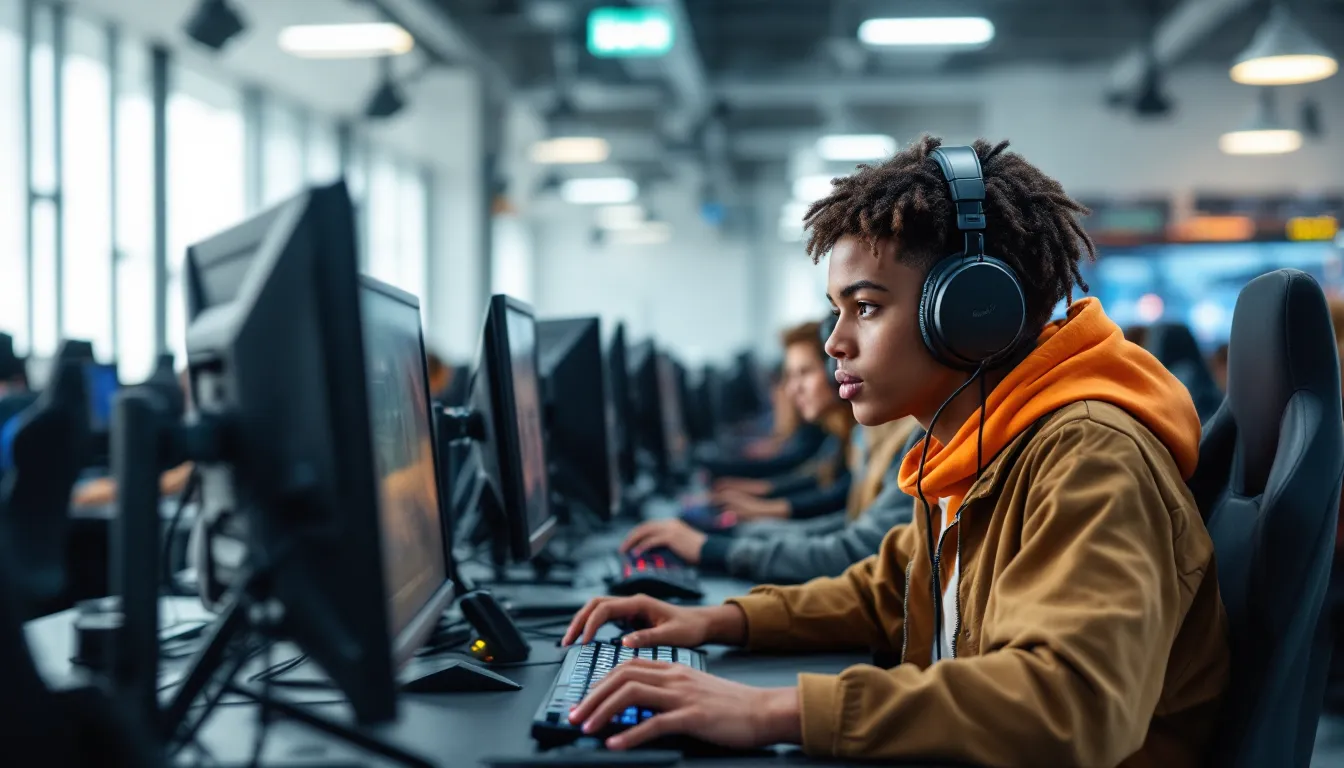
Esports has stopped being a niche hobby. It’s now a legitimate career path with real money, sponsorships, and university scholarships attached. Schools across the US and globally are recognizing this shift and building structured esports curricula to give students the skills they need to compete at the highest levels, or at least understand what competitive gaming actually demands. An esports curriculum isn’t just about sitting in front of a screen: it’s a comprehensive educational framework that covers game mechanics, team dynamics, mental resilience, analytics, and professional development. Whether a student is aiming for the pro scene, a coaching role, or a management position in the industry, today’s esports programs are designed to prepare them for multiple pathways. We’re seeing schools partner with gaming organizations, invest in tournament infrastructure, and hire dedicated esports coaches. This guide breaks down what modern esports education looks like, why schools are adopting it, what’s being taught, and how you can get involved.
Key Takeaways
- An esports curriculum is a formalized educational program combining game mechanics training, teamwork, mental resilience, analytics, and career exploration—not just casual gaming.
- Over 250,000 high school students in North America are now enrolled in structured esports programs, reflecting a five-fold increase since 2018 and industry-wide recognition of competitive gaming as legitimate.
- Modern esports curriculum covers game-specific training, communication skills, performance analytics, fitness, and mental health—mirroring the comprehensive approach of traditional sports programs.
- Career opportunities in esports extend far beyond professional play, including coaching, casting, content creation, team management, analysis, and business development roles.
- Schools should start small with club-based programs, secure funding through publisher partnerships and grants, hire experienced coaching staff, and integrate esports with academic subjects like data analysis and communication.
- Quality esports programs address burnout prevention, mental health support, and equity issues by enforcing balance, providing counseling access, and actively recruiting underrepresented groups including women players.
What Is an Esports Curriculum?
An esports curriculum is a formalized educational program that teaches competitive gaming principles, mechanics, teamwork, and career preparation. It differs from casual gaming instruction by emphasizing structured skill development, analytical thinking, and professional standards.
Unlike picking up a game on your own, a school-based esports curriculum provides:
- Game-specific training with certified coaching staff who understand meta shifts, balance patches, and optimal strategies
- Structured team environments where students compete in organized leagues and tournaments with defined rules and rankings
- Soft skills development including communication, leadership, problem-solving under pressure, and conflict resolution
- Career pathway exploration covering roles beyond professional play: casting, coaching, management, streaming, and esports business
- Mental and physical wellness components addressing burnout prevention, ergonomics, sleep optimization, and stress management
Think of it like how traditional schools teach football or basketball, with coaches, playbooks, conditioning, psychology, and tournaments. Esports curricula operate on the same principles but for competitive video games.
The scope varies. Some schools run basic after-school clubs with minimal structure. Others offer semester-long courses, dedicated esports facilities with high-end PCs and consoles, and teams competing in formal regional and national leagues. A few forward-thinking schools even offer esports scholarships or integrate esports into their standard academic curriculum, teaching data analysis through esports performance metrics or communication through team strategy debriefs.
The Rise of Esports Education in Schools
Why Schools Are Investing in Esports Programs
Schools didn’t suddenly start teaching esports out of nostalgia for video games. The shift is driven by practical concerns: student engagement, career readiness, and filling a gap in a booming industry.
Student retention and engagement are primary drivers. Traditional academic programs lose interest from certain students, particularly those who feel disconnected from conventional learning. Esports provides a hook, a competitive activity students are already passionate about. Schools report higher attendance, improved grades, and better school connection when esports programs exist. It’s not that gaming makes math better: it’s that engagement in any valued activity improves overall school investment.
The competitive gaming industry is genuinely massive. Major tournaments like The International (Dota 2), League of Legends World Championship, and VALORANT Champions offer prize pools in the tens of millions. More importantly for career planning: there are thousands of jobs in esports beyond pro play, team managers, analysts, content creators, event organizers, and business development roles. Schools recognize they have students interested in gaming: esports programs let them channel that interest into skill-building instead of just dismissing it.
Universities have also accelerated the trend. Scholarships for esports players now exist at hundreds of colleges, with some institutions offering full-ride scholarships comparable to traditional sports. This created a pipeline: high school esports programs funnel talented students into collegiate programs, which feed talent into professional organizations. Schools see esports as a legitimate competitive pathway, not a distraction.
Growth Statistics and Industry Recognition
The numbers tell the story. According to industry reports, over 250,000 high school students in North America were enrolled in structured esports programs as of 2025. That’s up from roughly 50,000 in 2018, a five-fold increase in seven years.
High school esports organizations like the National Association of Interscholastic Athletics (NAIA) and the High School Esports League (HSEL) now sanction official competitions. The HSEL alone organizes competitive seasons across multiple games and regions. State-level organizations have formed in nearly every US state, creating tiered competition structures that mirror traditional sports.
University esports has become even more established. The National Collegiate Esports Championship and conferences like the Collegiate Esports League showcase university-level competition. Hundreds of colleges now offer esports scholarships. Some institutions, like Robert Morris University and Indiana Tech, integrated esports early and now run substantial programs.
Major gaming companies and publishers are actively supporting school programs. Riot Games, Activision Blizzard, and Valve have created educational partnerships, esports leagues for high school students (like Riot’s North American Scouting Grounds), and content to help educators teach competitive gaming fundamentals. These publishers recognize that supporting education builds brand loyalty and talent pipelines.
Esports industry organizations have also formalized standards. Structures like collegiate esports associations ensure consistent rule enforcement, player eligibility, and competitive integrity, removing the “anything goes” perception that plagued early programs.
Core Components of a Modern Esports Curriculum
Game-Specific Training and Mechanics
Game-specific training is the foundation. Students learn the particular mechanics, meta, and strategic nuances of chosen titles. Most high school programs focus on 2-4 games: often League of Legends, VALORANT, Counter-Strike 2, and Fortnite, chosen for their established competitive scenes, publisher support, and skill-based gameplay.
Coaches break down:
- Mechanics: Precise input execution, positioning, timing, and resource management. In League, this means understanding CS (creep score), ability combos, and map control. In VALORANT, it’s crosshair placement, recoil patterns, and ability usage timing.
- Meta knowledge: What strategies and character picks are currently viable. The meta shifts with patches. A coach needs to explain why a champion or weapon is strong right now and how that will likely change.
- Map knowledge: Every competitive map has playable rotations, cover positions, objective locations, and timing windows. Players must internalize this.
- Role specialization: Most games assign roles (ADC, Mid, Support in League: Duelist, Controller, Sentinel in VALORANT). Training is tailored to role-specific mechanics and responsibilities.
High-quality programs use video review, replay analysis, and training tools. Many games provide built-in replay systems: coaches use these to point out positioning mistakes, missed opportunities, and mechanical errors. Some teams use AI-powered analysis tools or third-party software to break down performance metrics.
Teamwork and Communication Skills
Esports is not a solo try at competitive levels. Teams typically range from 5 to 10 players, with substitutes and analysts. Communication and coordination are as critical as mechanical skill.
Curricula emphasize:
- In-game callouts and communication: Players must relay information quickly and clearly. “Mid has enemy” or “Heavy armor spawning Site B in 3” need to be precise, jargon-heavy, and unambiguous under pressure. This isn’t natural: it’s trained.
- Roles and responsibility: Each player has assignments. In team fights, someone’s job is to initiate: someone else focuses on target priority: a support player watches team health. Students learn these responsibilities and execute them reliably.
- Conflict resolution: Teams lose, mistakes happen, and frustration builds. Programs teach students how to debrief losses without blame, give constructive feedback to teammates, and maintain mental resilience when things go wrong.
- Leadership within teams: Captains or in-game leaders (IGL) make real-time tactical calls. Programs identify and develop students who show leadership traits, teaching them how to command respect and make decisions under pressure.
Practical exercises often include practice scrimmages (5v5 matches against other teams), team building activities, and structured team meetings where losses are analyzed without finger-pointing.
Strategy, Analytics, and Performance Analysis
Modern esports is increasingly data-driven. Top teams employ analysts who track everything: economy (resource management in games like VALORANT), win conditions, opponent tendencies, and individual player performance metrics.
Students learn to:
- Analyze replays systematically: Watch a match and identify decision points. Why did a rotation fail? What should the team have done? What did the opponent exploit?
- Track statistics: Damage per round, kills per match, economy efficiency, objective control percentage. These metrics reveal patterns.
- Develop draft strategy: In games with character/agent selection phases (League, VALORANT), teams must understand matchups and team composition synergy. What beats the enemy team? What’s our win condition?
- Adapt to opponent playstyles: If the opposing team always pushes Site B early, how do we punish that? Analytics reveals patterns: strategy exploits them.
Some advanced programs incorporate spreadsheets, custom databases, or esports-specific analytics platforms. Teams might track opponent bans (champion picks they avoid), successful strategies, and player tendencies across multiple matches.
Mental Health, Fitness, and Player Wellness
Competitive gaming is mentally and physically demanding. Unlike traditional sports, it’s easy to overlook fitness and mental health in esports, a mistake that leads to burnout and poor performance.
Modern curricula include:
- Mental health and stress management: Competitive players face immense pressure. Programs teach coping strategies, mindfulness techniques, and when to seek professional support. Some curricula partner with sports psychologists.
- Physical fitness and ergonomics: Esports players sit for hours. Proper posture, desk setup, and regular movement breaks prevent injury. Some schools integrate fitness training alongside esports, not traditional cardio, but targeted exercises for hand strength, flexibility, and stamina.
- Sleep optimization: Professional players recognize sleep as critical for reaction time and decision-making. Programs educate on sleep hygiene, especially for students managing school and competitive gaming.
- Nutrition: What you eat affects performance. Programs discuss how to fuel properly, avoid energy crashes, and maintain focus during long tournaments.
- Burnout prevention: Playing the same game for 8+ hours daily causes burnout. Curricula teach time management, balanced lifestyle habits, and when to step back.
This component separates serious esports programs from casual ones. A school recognizing that esports is legitimate also recognizes that player welfare is non-negotiable.
Different Esports Disciplines and Their Curriculum Focuses
Competitive FPS (First-Person Shooters)
FPS games like Counter-Strike 2, VALORANT, and Call of Duty emphasize mechanical precision, tactical positioning, and team economy management.
Curricula for FPS focus on:
- Aim and crosshair placement: The difference between professional and amateur players is partly raw mechanical skill. Training includes aim trainers (like Aim Lab or KovaaK’s), sensitivity settings optimization, and repetitive drills to build muscle memory.
- Map control and positioning: Every inch of the map matters. Players learn sight lines, cover positions, and rotation paths. In Counter-Strike, map knowledge directly determines whether you’ll win or lose a round.
- Economy management: In VALORANT and CS, players earn money each round. Spending efficiently, when to buy weapons, when to save for the next round, is core strategy. Mismanaging economy loses rounds that were otherwise winnable.
- Utility usage: Abilities or grenades (smokes, flashes, molotovs) are as important as gunplay. Proper ability timing and placement create advantages. CS coaches spend entire sessions drilling grenade lineups.
- Reaction time under pressure: Tournament matches are high-stakes. Training includes timed challenges, clutch simulations (1v5 scenarios), and pressure-tested scrimmages.
Many FPS programs use established tools like private CS servers, VALORANT practice mode, and third-party aim trainers to supplement team practice.
MOBA and Strategy-Based Games
League of Legends and Dota 2 are the flagship MOBAs. These games emphasize macro strategy (map awareness, objective prioritization, rotation timing) and micro mechanics (last-hitting, ability combos).
Curricula emphasize:
- Last-hitting and economy: In MOBAs, farm (creep kills) is your income. Poor CS (creep score) loses you gold and pressure. Training focuses on perfecting last-hitting in pressure-free environments, then in scrimmages.
- Macro play and rotations: Good positioning wins lane, but winning the game requires rotating to objectives (towers, Baron, Dragons). Students learn when to rotate, how long rotations take, and win condition timings.
- Champion matchups and draft strategy: Every champion has strengths and weaknesses. Teams must draft to synergize, counter the enemy, and execute their win condition. Analysis of draft phases teaches game theory.
- Team fight positioning and priority: In team fights, positioning and target priority determine outcomes. Who do you focus? Where do you stand? What’s the engagement order?
- Objective prioritization: When do you take Baron versus a tower? When do you chase kills versus farming? These decisions require both mechanical skill and strategic understanding.
LCS (League Championship Series) and international competition provide curriculum content. Teams study pro matches, analyze draft decisions, and replicate high-level strategies.
Fighting Games and Fighting Game Community Training
Street Fighter 6, Tekken 8, and Guilty Gear Strive represent fighting game curricula. Unlike team-based games, fighting games are 1v1, but curriculum is equally structured.
Focus areas:
- Frame data and combo execution: Fighting game depth comes from frame data (the milliseconds between moves). Students memorize optimal combos, punishment windows, and spacing. This requires precision, practice, and often studying frame data spreadsheets.
- Neutral game and footsies: The “neutral game” is the constant spacing and positioning dance before a combo starter lands. Mastering this determines match outcomes. Training includes sparring, studying pro matches, and character-specific drills.
- Matchup knowledge: With 15-20 characters, players must understand every matchup, what’s your optimal strategy against each character? This requires studying specific opponents’ playstyles.
- Mental fortitude: 1v1 games are psychologically grueling. There’s nowhere to hide: every loss is personal. Training includes mental coaching and exposure to high-pressure matches.
The fighting game community (FGC) has a strong grassroots culture. Programs often partner with local FGC figures, attend community tournaments, and emphasize both competition and community values.
Technology and Tools Used in Esports Education
Gaming Hardware and Setup Requirements
Competitive gaming demands reliable hardware. Schools investing in esports must budget for quality PCs, monitors, and peripherals, or they’re setting students up to fail.
PC specs for competitive gaming typically require:
- CPU: Mid-to-high-end processors (Intel i5/i7 or AMD Ryzen 5/7) capable of maintaining 144+ FPS in competitive titles.
- GPU: NVIDIA RTX 3070 or better, or AMD equivalent, to push high refresh rates at reasonable graphical settings.
- Monitor: 144Hz or higher refresh rate, low response time (1ms). The difference between 60Hz and 144Hz is noticeable: competitive play demands the latter.
- Peripherals: Low-latency mouse (optical switches preferred), mechanical keyboard, reliable headset with accurate audio and microphone.
- Setup: Proper desk height, ergonomic chair, monitor positioning at eye level.
Console esports (PlayStation, Xbox) requires the respective hardware plus high-end monitors and controllers. Fortnite, for example, runs on PC, console, and mobile: schools might support multiple platforms depending on curriculum focus.
Costs add up quickly. A single competitive-grade PC setup (tower, monitor, peripherals) runs $1,500–$3,000. Schools with 20-30 students typically invest $50,000–$100,000+ in hardware, not counting maintenance, upgrades, and replacement.
This is why many schools partner with hardware manufacturers. Companies like ASUS, MSI, and Corsair often sponsor esports programs, providing discounted equipment or donated hardware.
Streaming and Content Creation Platforms
Modern esports programs increasingly emphasize content creation. Players who understand streaming, video editing, and audience engagement have additional career paths and personal branding opportunities.
Streaming platforms used:
- Twitch: The dominant esports streaming platform. Programs teach students how to set up stream overlays, manage chat, and build audiences.
- YouTube: Long-form esports content, guides, and highlight reels live here. Schools may produce educational content showcasing their program.
- Discord: Critical for team communication and community building. Almost every esports organization uses Discord for team calls, strategy discussion, and announcements.
Content creation tools:
- OBS (Open Broadcaster Software): Free, industry-standard streaming software. Learning OBS is essential for anyone interested in content creation.
- Editing software: DaVinci Resolve (free) or Adobe Premiere for creating highlight reels, guides, or educational content.
- Analytics tools: YouTube and Twitch provide analytics showing viewer engagement, peak hours, and audience demographics, valuable data for aspiring content creators.
Curricula increasingly include a “content creation” track. Students learn to edit clips, optimize for platform algorithms, engage audiences, and understand the business side of content (sponsorships, monetization thresholds, audience growth).
This is strategic: it prepares students for careers in esports content, diversifies income for aspiring pros, and markets the school’s program through student-generated content.
Career Pathways Beyond Professional Play
Coaching, Casting, and Commentary
Not every esports student will go pro. Smart programs emphasize alternative career paths, starting with roles that directly surround the game.
Coaching is an obvious path. Schools train students interested in coaching to understand game depth, identify player weaknesses, and develop training regimens. Some programs have student coaches assisting staff, providing mentorship experience. A few advanced programs even certify students as coaches through publisher programs or third-party esports education providers.
Casting and commentary are highly visible roles. Esports casters provide live play-by-play commentary during matches, similar to sports broadcasters. The role requires deep game knowledge, quick thinking, and communication skills. Programs teaching esports may include a casting booth (camera, microphone, streaming setup) where students practice calling matches, develop commentary style, and build demo reels.
Resources like Dexerto esports news showcase professional casters and casting at the highest levels. Students can study high-level tournaments to understand casting cadence, terminology, and hype moments. Some programs even arrange for professional casters to visit and share insights.
Content creation and streaming fall under this umbrella. A skilled streamer who builds an audience through entertaining gameplay or educational content can earn substantial income through subscriptions, donations, and sponsorships, sometimes more than lower-tier professional players.
These roles require overlapping skills: game knowledge, communication ability, and audience understanding. Many successful casters start as players and transition: others build streaming careers independently.
Esports Management and Business Roles
Behind every professional team is an organization: managers, coaches, analysts, psychologists, nutritionists, and business staff. This is where many esports jobs exist, often with better stability than pro play.
Esports management covers:
- Team management: Handling player contracts, scheduling, and logistics. Managing a team of five players across bootcamps, tournaments, and scrimmages is complex.
- Analysis and strategy: Performance analysts track statistics, identify weaknesses, and inform strategy. This is a growing role: top teams employ multiple analysts.
- Business development: Sponsorship acquisition, brand partnerships, and revenue generation. Esports organizations generate income through sponsorships, tournament prize pools, and content rights.
- Event organization: Running tournaments requires coordination: venue logistics, broadcast setup, player registration, rule enforcement. Schools sometimes host intra-school or regional tournaments, giving students hands-on experience.
- Human resources and player welfare: Managing team culture, addressing conflicts, and ensuring player mental health. This role has grown in importance as esports professionalized.
Curricula preparing students for management often partner with local esports organizations, offering internships or guest lectures from managers and business professionals. Programs might assign students to manage school team logistics, giving practical experience.
Understanding esports business is increasingly valuable. Resources like Dot Esports coverage provide industry news on sponsorships, team funding, and organizational changes, students can analyze these to understand business dynamics.
These roles don’t require pro-level mechanical skill. They reward organization, strategic thinking, communication, and business acumen. For many students, this is a more realistic and sustainable career path than professional play.
Challenges and Criticisms of Esports Curriculum
Esports programs aren’t universally praised. Legitimate criticisms exist, and forward-thinking programs address them head-on.
Credibility and legitimacy concerns persist in some communities. Not everyone views competitive gaming as “real” athletics or a serious educational try. Some argue schools should prioritize traditional academics or physical sports. Progressive schools counter that esports offers legitimate competitive and skill-building value: dismissing it outright ignores student interests and industry reality.
Burn-out and mental health risks are real. Students can become consumed by competitive gaming, prioritizing esports over academics, sleep, and social relationships. Schools must actively manage this, enforcing play time limits, monitoring grades, and providing mental health support. The best programs don’t just teach esports: they teach healthy balance.
Access and equity issues are significant. Quality esports hardware is expensive. Schools in well-funded districts can invest heavily: underfunded schools struggle. This creates a divide where wealthy students access better facilities and coaching. Addressing this requires intentional advocacy, seeking grants and sponsorships, and being creative with resources.
Addiction and problematic gaming is a concern, especially with younger students. While competitive esports is structured and goal-oriented, some students blur the line between healthy competition and excessive gaming. Programs must educate on healthy habits and know when to involve parents or counselors.
Gender representation is another challenge. Esports, like traditional gaming, has skewed heavily male. Women are underrepresented as players and increasingly as coaches and content creators. Progressive programs actively recruit and support women players, but systemic change is slow.
Limited career opportunities outside the top tier is a hard truth. Not every esports student will go pro or land a management role. Some will complete programs and have limited esports-specific career options. Good programs acknowledge this and emphasize transferable skills, teamwork, communication, analytics, that apply beyond esports.
Academic integration varies wildly. Some schools treat esports as extracurricular: others integrate it into curriculum (using esports for teaching data analysis, communication, or psychology). The latter approach is more robust and justifiable educationally.
The strongest programs address these criticisms transparently. They balance competition with wellness, actively build inclusive communities, and emphasize both pro pathways and transferable skill development.
How to Get Started With Esports Education
If you’re a student interested in esports education, a teacher considering starting a program, or a school administrator evaluating whether to invest, here’s how to start.
For students:
- Join or start a school club: Many schools have esports clubs even without formal curriculum. If yours doesn’t, propose one to administration. You’ll need volunteers (students and ideally a staff sponsor), a place to meet, and basic hardware access.
- Identify your target game(s): Most programs focus on 2-4 games. Research which games align with your school’s interests and which have established competitive scenes.
- Find a coach or mentor: Ideally someone with esports experience. If unavailable, online communities and published guides can help. Many games have built-in practice modes and tutorials.
- Compete locally: Most regions have local tournaments or online leagues for schools. The High School Esports League, state esports associations, and game-specific organizations run competitions.
- Document and stream: Create a Discord for your team, stream practices, and build a community. This helps recruit new players and improves team cohesion.
For educators and administrators:
- Research your region’s esports landscape: What leagues, competitions, and other schools exist? Many states have esports athletic associations with resources, rules, and competitive pathways.
- Start small: You don’t need full infrastructure day one. Begin with an after-school club, one game, and basic hardware. Grow from there.
- Seek funding and partnerships: Local businesses, esports publishers, and tech companies often sponsor programs. Write grants specifically for esports equipment.
- Hire or train coaching staff: Ideally, coaches have competitive esports experience. Publisher-backed training programs exist (Riot Games has esports coaching certifications, for example). You can also hire esports players from your community.
- Develop clear policies: Define which games are supported, what behavior standards apply, mental health support mechanisms, and time commitment expectations. Professionalize your program from the start.
- Integrate with academics: Consider how esports can reinforce curriculum. Data analysis, psychology, communication, business, esports touches all of these.
- Connect with esports organizations: Reach out to game publishers, local professional teams, and esports media. Many are willing to support education.
Resources like HLTV for competitive gaming information showcase what high-level competitive play looks like. Studying professional matches, understanding meta, and learning from the best accelerates program development.
Timeline expectations:
- Months 1-3: Club formation, hardware acquisition, basic training.
- Months 4-6: Competitive entry into local tournaments, team formation, meta study.
- Months 6-12: Team development, improved tournament placements, recruitment of new players.
- Year 2+: Established program with multiple teams, consistent tournament participation, and integration into school culture.
Some schools move faster: others build slowly. There’s no wrong speed, consistency and player welfare matter more than rapid growth.
Conclusion
Esports curriculum represents a genuine shift in how schools engage students and prepare them for a growing industry. It’s not about replacing traditional education or turning every student into a pro gamer. It’s about recognizing that competitive gaming is legitimate, skill-intensive, and career-viable, and building structured programs that develop talent, teach transferable skills, and support student wellness.
The best programs balance competition with mental health, emphasize teamwork and communication alongside mechanical skill, and acknowledge that career paths exist beyond professional play. They’re inclusive, well-resourced, and integrated with academics. They treat esports with the seriousness traditionally reserved for sports while recognizing the unique challenges of gaming culture.
In 2026, esports education isn’t experimental anymore. Hundreds of schools run competitive programs, hundreds of colleges offer scholarships, and industry organizations provide structure and legitimacy. The question is no longer “Should schools have esports programs?” but “How do we scale and improve them?”
Whether you’re a student exploring competitive gaming, an educator considering starting a program, or an administrator evaluating the opportunity, the fundamentals are clear: esports requires skill, dedication, strategy, and mental resilience. A quality curriculum teaches all of these while preparing students for whatever comes next, pro play, content creation, business, or simply becoming a more skilled, disciplined competitor. That’s what modern esports education delivers.