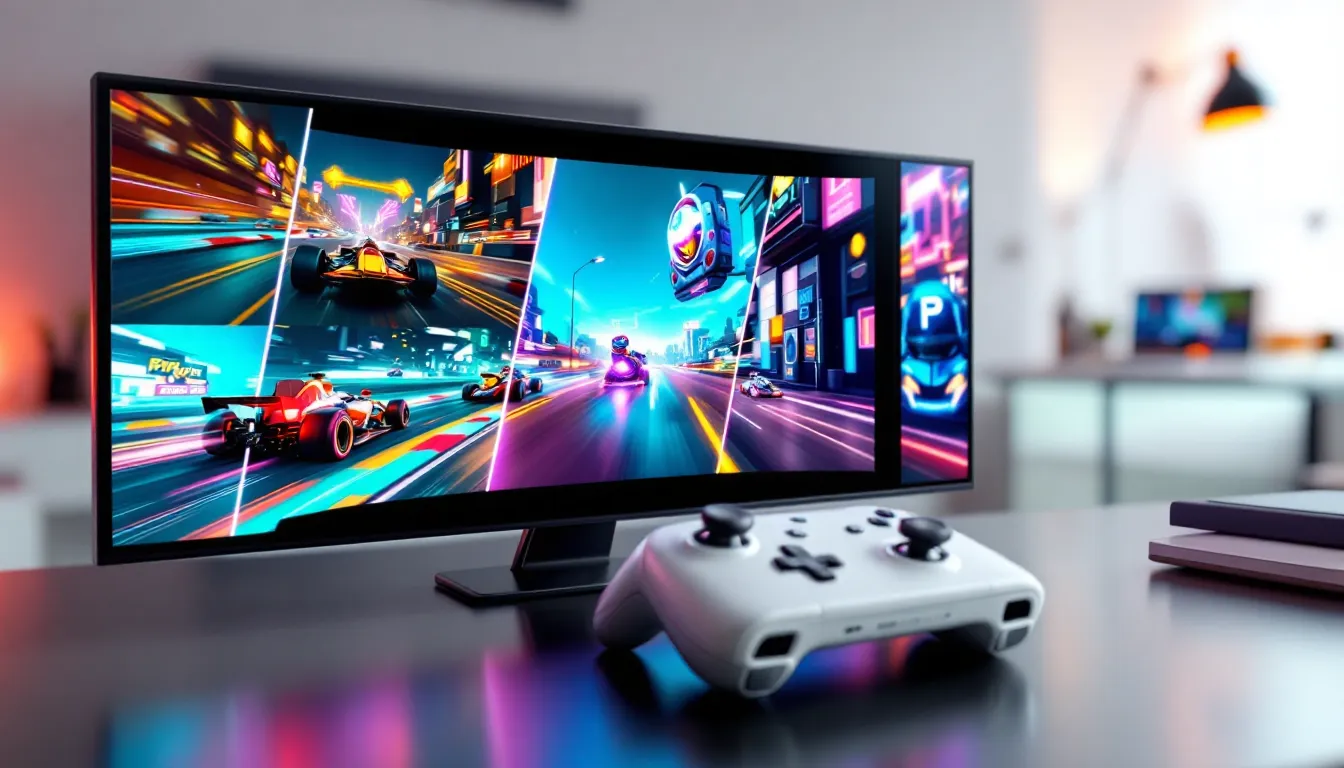
The Nintendo Switch has quietly built one of the strongest racing game libraries on any console. Whether you’re hunting for competitive thrills, casual fun with friends, or something completely off the wall, there’s a racing game waiting for you. The beauty of the Switch isn’t just its portability, it’s the variety. You’ve got arcade chaos, simulation depth, free-to-play bangers, and character-driven fun all coexisting on the same platform. The landscape shifted significantly through 2025 and into 2026, with new releases and updates reshaping what “best” even means. This guide cuts through the noise and breaks down the top racing games for Nintendo Switch by category, so you can find exactly what you’re looking for without wasting time on mediocre ports or overhyped duds.
Key Takeaways
- The best racing games for Nintendo Switch span multiple genres—from arcade chaos to simulation depth—with Mario Kart 8 Deluxe, F1 24, and Trackmania leading their respective categories.
- Nintendo Switch’s hybrid design and massive install base (139+ million units) have made it a premier platform for diverse racing experiences, from AAA titles to innovative indie games.
- F1 24 delivers serious competitive racing simulation with realistic car tuning, tire degradation, and skill-based ranking systems that reward consistency and eliminate luck from outcomes.
- Free-to-play racing games like Asphalt Legends Unite offer zero financial commitment with respectful monetization and 60fps performance across both handheld and docked modes.
- Performance varies across titles—prioritize 60fps games like Mario Kart 8 Deluxe and Trackmania for handheld play, while cloud-based options like Forza Motorsport 7 demand stable internet but deliver premium graphics.
- Your ideal racing game depends on playstyle: choose Mario Kart for casual multiplayer fun, F1 24 for simulation depth, Need For Speed Unbound for arcade thrills, or Trackmania for pure skill-based progression.
Why Nintendo Switch Dominates Racing Game Selection
The Switch’s position in the gaming ecosystem has created a perfect storm for racing games. Unlike some genres that migrated entirely to high-end platforms, racing thrives on the Switch because developers understand something crucial: not every racer needs 4K textures and ray tracing to be fun. The hybrid nature of the Switch, docked play, handheld mode, detachable controllers, created a niche that publishers actively chase.
Speed is irrelevant if you’re stuck at home on a couch. But racing games that run acceptably in handheld mode? That’s gold. Titles like Mario Kart 8 Deluxe proved that limiting hardware doesn’t limit creativity or depth. Performance scaling works. Good game design works better.
The Switch also benefits from strong third-party support that many dismissed at launch. Racing games arriving on Switch now aren’t ports of decade-old titles (mostly). Recent releases like F1 24 and Need For Speed Unbound brought current-gen racing experiences to the platform with surprising competence. Factor in the massive install base, over 139 million units sold, and you understand why publishers keep delivering.
Then there’s the indie revolution. Smaller studios discovered the Switch was a goldmine for experimental racing concepts. Trackmania, Redout, and dozens of others found audiences that simply don’t exist elsewhere. The platform became a testing ground for weird, bold racing ideas that might never reach PlayStation or Xbox.
The result: the deepest, most diverse racing library available today. Not the most technically impressive. The most diverse.
Premium Racing Titles Every Switch Owner Should Play
Mario Kart 8 Deluxe: The Undisputed Champion
Mario Kart 8 Deluxe is still king, and not because of nostalgia. It’s king because it’s genuinely excellent at what it does: delivering instant fun to anyone holding a controller. Released in March 2017, it launched alongside the Switch and has dominated ever since. As of 2026, it’s the best-selling racing game on the platform, period.
The roster spans 48 characters across multiple weight classes, each with meaningful stat distributions. Lightweight characters like Toad accelerate faster but struggle with top speed. Heavy hitters like Bowser demand patience but reward committed players with raw power. The 200cc difficulty tier separates casual players from people who’ve invested hundreds of hours. It’s brutal, precise, and incredibly rewarding once you master the timing.
Track design is exceptional. The 48 courses, 32 new, 16 retro, offer genuine variety in difficulty curves and hazard placement. Baby Park plays like a pure skill test. Cheese Land demands drift mastery. Ribbon’s Road punishes aggressive driving with environmental traps. No two tracks feel identical.
Online multiplayer remains active. You’ll find 150cc lobbies within seconds, with skill-based matchmaking keeping things competitive. That said, competitive Mario Kart exists in a weird space, it’s approachable enough for casuals but deep enough for people attending regional tournaments. The item mechanics introduce RNG that frustrates hardcore competitors, but that’s intentional design. It keeps games from being purely skill-determined.
Buy this if you want: Easy entry-level racing with depth lurking underneath.
F1 24: Serious Competitive Racing Simulation
If Mario Kart is the casual gateway, F1 24 is where serious racers live. Released in September 2024, this is the official Formula 1 simulation for Switch, and it punches way above its technical weight.
The career mode spans multiple seasons of championship racing. You pick a team, negotiate contracts, manage tire degradation, and navigate real-world regulations. Setup tuning actually matters, suspension stiffness, brake balance, wing angle, all of it affects lap times and consistency. The learning curve is steep, but the payoff is genuine. A well-tuned car on the right racing line feels fundamentally different from a poorly configured one.
Online ranked races use points systems mirroring actual F1 standings. Aggressive driving gets penalized. Cutting corners triggers lap time deletions. This isn’t arcade racing pretending to be simulation. This is simulation. Performance penalties for mistakes keep the field competitive and rewards smooth, consistent driving.
Handling degradation across a race distance separates good drivers from lucky ones. Tires heat up differently depending on track surface. Fuel load impacts acceleration and braking distance. Weather systems introduce variables that force adaptation. A driver who’s perfect in dry conditions might struggle when rain hits. Adaptability wins championships.
Switches hardware limitations mean compromises: grid penalties are calculated but not visualized like PS5 versions, and some weather effects lack detail. That doesn’t matter because the racing underneath remains intact. You’re hitting apexes, managing tire temps, and competing for pole position. The visual polish is secondary to the mechanical execution.
Buy this if you want: Deep simulation racing with genuine strategic depth and online competition.
Need For Speed Unbound: High-Octane Street Racing
Need For Speed Unbound arrived in December 2022, and it represents something unusual for the franchise: a successful Switch port that doesn’t feel neutered. This isn’t Payback or Heat dumbed down. It’s Unbound adapted.
The campaign follows a street racer building reputation through sanctioned races, police pursuits, and underground events. It’s exactly what NFS fans expect: fast cars, cosmetic customization, and a progression system that rewards playtime. The story is forgettable, but it’s not why you’re here.
The appeal is in the driving. Pursuit mechanics create genuine tension. Police chases escalate in intensity as your heat level rises. Higher wanted levels mean better rewards but also harder escape requirements. It’s risk-versus-reward in its purest form. You can play safe and grind easy races, or you can chase high-heat pursuits for massive payouts and custom car parts.
The car customization system is absurdly deep. Body kits, wheel designs, paint jobs, underglow lighting, the catalog rivals any arcade racer. Performance upgrades directly impact acceleration, top speed, handling, and braking. Upgrading your car matters mechanically, not just aesthetically.
Multiplayer supports cross-platform play (weird, but it works), and the community remains active in 2026. You’ll find quick matchmaking in pursuits and circuit races. The skill gap is noticeable, experienced players absolutely demolish newcomers in online races. Practice offline first.
Buy this if you want: Fast-paced arcade racing with character, customization depth, and the adrenaline rush of police pursuits.
Best Indie And Budget-Friendly Racing Games
Asphalt Legends Unite: Free-To-Play Action Racing
Asphalt Legends Unite is free. Completely free. You download it from the eShop, create an account, and start racing immediately. Yes, it has cosmetics and battle pass mechanics, but you don’t need them to compete.
The game throws you into arcade racing madness. 100+ cars span hypercar superstars to quirky vehicles. Event types vary wildly: pure circuit races, knockout eliminations where last place gets removed every lap, and pursuit modes that mirror NFS. The progression curve is generous. You earn currency fast, unlock new cars consistently, and feel rewarded for grinding.
Graphics scale beautifully across handheld and docked modes. Docked play delivers smooth 60fps at 1080p. Handheld mode maintains 60fps at 720p with minor visual sacrifices. For a free-to-play title, the technical execution is impressive.
The monetization is respectful. Battle pass costs money, but progress happens without it. Cosmetics are purely visual. No pay-to-win mechanics lock progression behind paywalls. It’s the rare example of ethical free-to-play design.
Online multiplayer supports up to 8 players in public lobbies. Matchmaking finds races quickly. The community’s casual and welcoming. You won’t find sweaty competitive play here, but you’ll find fun, fast racing without friction.
Buy this if you want: Zero financial commitment to arcade racing fun.
Drift Legends: Arcade Drifting Fun
Drift Legends is niche. It knows exactly what it is: a drifting game. Nothing else. Pure drifting mechanics, drifting progression, drifting everything.
The campaign spans 50+ drift events across city streets, mountain roads, and industrial zones. Each event challenges you to chain drifts, maintain momentum, and hit perfect timings. Scoring heavily rewards consecutive drifts without breaking the chain. Mess up once, and your combo resets. It’s forgiving for learning but punishes sloppy execution at higher difficulties.
Customization focuses on performance tuning. Suspension stiffness, brake bias, tire grip, these directly influence how your car responds to your inputs. Experimenting with setups reveals that different cars demand different approaches. A lightweight sports car drifts snappier than a heavy sedan. Both are viable: they just require different techniques.
Docked performance holds 60fps consistently. Handheld mode dips occasionally during intense multi-car events, but it’s acceptable for the scale. The visual style is clean, unpretentious, and effective.
Online multiplayer supports up to 4 players in drift battles. You compete for best combos rather than racing positions. It’s collaborative in spirit while remaining competitive in execution. Leaderboards track regional and global scores, giving drifting obsessives endless progression to chase.
Buy this if you want: Focused, mechanics-driven drifting without distraction.
Redout: Space-Age High-Speed Racing
Redout is Wipeout-inspired without being a Wipeout clone. It takes the anti-gravity racing concept and evolves it into something genuinely unique on Switch. This is a 34BigThings studio production, and the design philosophy is uncompromising: speed matters, skill matters, everything else is secondary.
The tracks are bonkers. Floating in space, looping through impossible geometry, phasing between dimensions, the visual set pieces are simultaneously beautiful and deliberately disorienting. That disorientation is the point. High-speed racing demands focus. Distractions sharpen your concentration.
Handling is tight. Boost management separates experienced pilots from button-mashers. You can’t just hold the acceleration button and win. Strategic boost usage, line optimization, and airtime management determine placement. The skill ceiling is remarkably high for an indie title.
Difficulty scales across 5 tiers. Easy mode lets you ease in. Hard mode punishes mistakes brutally. Extreme mode is something else entirely. Competitive pilots train on Extreme, pushing lap times and breaking records. It’s a progression system that respects your skill while forcing growth.
Graphical fidelity in handheld mode is lower than docked, which is expected. What matters is consistency. Docked play maintains 60fps without compromise. Handheld mode occasionally dips to 45fps during dense particle effects, but it’s serviceable. The visual design compensates through artistic direction rather than brute power.
Multiplayer is local and online. Up to 4 players race simultaneously. Online leaderboards track race times globally. There’s no battle pass, cosmetics, or monetization beyond the initial purchase. You’re buying a complete game.
Buy this if you want: Futuristic racing that demands genuine piloting skill.
Niche And Unique Racing Experiences
Forza Motorsport 7: Performance And Realism
Forza Motorsport 7 is exclusive to Game Pass Ultimate for Switch, accessed through cloud play. It’s not a native port. It’s streamed from Microsoft servers. That distinction matters for performance, but it doesn’t diminish the experience.
With cloud play, you’re running the full Xbox version remotely. That means 1440p resolution, high-fidelity graphics, and the complete car roster without compromise. Over 700 vehicles span from classic Ferraris to modern hypercars to legendary race cars. Each has realistic performance characteristics. A 1970s muscle car handles fundamentally differently from a contemporary hybrid supercar.
Dynamic weather impacts racing significantly. Rain reduces grip, forcing lower speeds and earlier braking. Wind affects high-speed stability. Night races eliminate vision, demanding line precision without visual cues. These aren’t cosmetic changes. They’re mechanical alterations that reshape strategy.
Career progression spans 200+ events across championships, special events, and endurance races. Single-race payouts are modest, but championship victories reward significantly. The progression curve encourages grinding specific series to upgrade favorite cars.
Cloud play demands a stable internet connection. 5GHz WiFi or wired ethernet is essential. Latency above 50ms introduces noticeable input lag. If your connection is solid, you won’t notice the streaming. If it’s marginal, frustration sets in. That’s the honest reality of cloud gaming in 2026.
Buy this if you want: Premium simulation racing through Game Pass without downloading gigabytes.
Trackmania: Skill-Based Stunt Racing
Trackmania is brilliant and polarizing. It’s racing divorced from cars or physics simulators. It’s pure skill-based action where you navigate increasingly impossible tracks by memorizing lines and perfecting execution.
The campaign provides structure through 10 seasons of progressive difficulty. Early tracks teach fundamentals. Later tracks demand precision that borders on superhuman. Top players complete “impossible” tracks in their sleep. Beginners spin out and restart repeatedly. That gap between novice and expert is intentional and massive.
Time trials are the competitive heart. You race against your own times, chasing milisecond improvements. Global leaderboards show how you rank against millions. Finding your position on those leaderboards, then grinding to improve placement, is addictive. It’s the opposite of narrative-driven progression. It’s pure progression through repetition and skill acquisition.
Editor mode lets you build custom tracks. Thousands of community-created courses are available in the seasonal playlist. This extends content indefinitely. You’ll never run out of tracks if you engage the community.
Performance is locked at 60fps in handheld and docked modes. The visual style is deliberately minimalist, bright colors, clean geometry, zero distraction. Everything serves gameplay.
Multiplayer supports both cooperative time trial racing and competitive battles. You race individually but see ghost cars from competitors. It’s collaborative in feel while remaining competitive in scoring.
Buy this if you want: Pure skill-progression racing without simulation complexity.
Racing Games For Casual Players And Families
Crash Team Racing Nitro-Fueled: Character-Driven Fun
Crash Team Racing Nitro-Fueled is deceptively deep. On the surface, it’s a kart racer with Crash Bandicoot characters doing goofy things. Underneath, there’s legitimate racing depth hiding beneath cartoon charm.
Character selection actually matters. Each driver has distinct stat distributions affecting acceleration, top speed, and handling. Picking the right character for your playstyle yields faster lap times than ignoring class strengths. Tiny Tiger drives differently than Dingodile, and both are viable depending on tracks and opponent patterns.
Power-sliding is the core mechanic. Charging drifts builds boost. Perfect timing multiplies boost power. Chaining boosts across an entire lap creates massive speed advantages. Casual players can win through pure speed and chaos. Skilled players exploit boost chains to dominate. The skill ceiling exists, but the floor is accessible.
The cosmetic customization system is absurd in the best way. Skins, karts, wheels, exhaust animations, thousands of combinations exist. None affect performance. It’s pure cosmetic expression. If you want your racer to look ridiculous, Nitro-Fueled enables that fully.
Story mode is actually charming. Rather than ignoring narrative entirely, CTR leans into Crash franchise humor. Boss races against familiar villains provide context for progression. It’s not Shakespeare, but it’s entertaining enough that you won’t skip cutscenes.
Adventure mode, cups, and championships give structure to single-player progression. Online multiplayer remains active with reasonable matchmaking. You’ll find competitive races quickly without excessive waiting.
Buy this if you want: Character-focused kart racing that respects player skill while staying accessible.
Sonic Team Racing: Speed With Personality
Sonic Team Racing exists in an odd space. It’s technically superior to Sonic Kart (the racing equivalent), but it launched after Mario Kart 8 Deluxe already dominated the market. Even though arriving to late-stage attention, it’s genuinely excellent.
The roster draws from the entire Sonic universe. Sonic, Tails, Knuckles, and 16 other characters represent different franchises under the Sonic umbrella. Amy, Vector, Big the Cat, characters who’d never appear in Mario Kart feel natural here because of existing relationships. The character selection reflects Sonic’s identity rather than chasing Mario’s formula.
Team racing is the differentiator. Rather than competing individually, you race as teams of three. Your team’s position matters more than your individual placement. This creates interesting strategy. You can sacrifice your position to help teammates get ahead. Support becomes viable. Cooperation is rewarded.
Track design is excellent. Courses loop through Chemical Plant, Seaside Hill, and other Sonic classics with fresh interpretations. Hazards are present but manageable. The balance between chaos and skill is well-calibrated.
Drifting mechanics are tighter than you’d expect from a Sonic game. Power-sliding isn’t just functional: it’s the core skill determining winners. Holding your drift at perfect angle maximizes boost. Break too early or too late, and boost suffers. Learning the timing across different tracks becomes the progression path.
Multiplayer supports both local and online play with crossplay functionality. Finding matches is fast. Competitive skill matching exists, though it’s less precise than F1 24.
Buy this if you want: Team-focused kart racing with Sonic franchise identity.
Experience the full library by checking Nintendo Life’s eShop recommendations for seasonal updates on new racing releases hitting the Switch.
Choosing Your Perfect Racing Game
Matching Games To Your Playstyle
Identifying what you actually want from a racing game eliminates decision paralysis. Most people think “racing game” means one thing. It actually means dozens of things.
Are you seeking multiplayer chaos where friends gather on one console? Mario Kart 8 Deluxe remains unbeatable. The barrier to entry is zero. Anyone can pick up a controller and feel competent within minutes. Skill gaps emerge after hours, but newcomers don’t feel helpless immediately.
Do you want competitive depth where your personal skill determines outcomes? F1 24 and Trackmania separate players by execution and consistency. Luck plays virtually no role. Better drivers win consistently. If that’s your aesthetic, these deliver.
Are you chasing arcade thrills without simulation weight? Need For Speed Unbound, Asphalt Legends Unite, and Crash Team Racing Nitro-Fueled prioritize fun over realism. Physics are forgiving. Mistakes are recoverable. Winning requires skill but doesn’t demand mastery.
Do you want something weird that breaks the racing mold? Redout and Trackmania offer anti-gravity and stunt racing respectively. If standard circuit racing feels stale, these alternatives refresh the formula.
Family gaming? Sonic Team Racing and Mario Kart 8 Deluxe both work excellently. Team mechanics in Sonic make cooperation feel rewarding. Mario Kart’s item-based chaos creates unpredictable outcomes where anyone can win on any given lap.
Performance And Technical Considerations
Switch hardware has clear limitations. Not every racing game achieves 60fps. Understanding which titles prioritize smoothness versus visual fidelity matters for enjoyment.
60fps titles include Mario Kart 8 Deluxe, F1 24, Trackmania, and Asphalt Legends Unite. These run consistently in both handheld and docked modes. Frame consistency matters more than resolution. A smooth 30fps game might feel worse than a stable 60fps with lower res.
Variable performance appears in Need For Speed Unbound (mostly 60, occasional dips), Crash Team Racing (generally solid, some multiplayer drops), and Redout (handheld performance is occasionally inconsistent). These titles remain playable but acknowledge the Switch’s constraints.
Cloud games like Forza Motorsport 7 depend entirely on your internet stability. Excellent connection? You’re getting near-console-quality graphics. Unstable connection? You’re experiencing compression artifacts and latency. Your experience varies based on infrastructure rather than the Switch itself.
Handheld-specific considerations matter. Some games look rough on the small screen. Others scale beautifully. If you’re primarily playing portably, try titles in handheld mode before committing. Reviews on Game Rant’s racing guides detail handheld performance specifically.
Storage is another factor. Mario Kart 8 Deluxe requires 13GB installed. F1 24 needs similar space. Free-to-play titles like Asphalt Legends Unite are smaller but download patches regularly. Budget your microSD card space accordingly.
Docked versus handheld isn’t a minor consideration. You’re choosing between high-quality gaming at home or compromised quality on the go. Some games handle that tradeoff better than others. Trying before buying, if possible, eliminates disappointment.
Research patch history before committing. Games released in 2024-2025 often received significant balance changes and performance improvements through 2026. Current recommendations might not match launch reviews. Check Twinfinite’s game guides for patch-note summaries showing post-launch evolution.
Online stability matters for multiplayer titles. F1 24 ranked races demand consistent connections. Latency spikes disqualify you from matches. If your internet fluctuates regularly, single-player titles are safer investments.
Final consideration: free-to-play versus paid. Asphalt Legends Unite is genuinely free. Crash Team Racing, Need For Speed, and Mario Kart are one-time purchases. F1 24 arrives annually with new cars and seasons. Trackmania has a free edition plus premium tier. Your budget shapes possibilities.
Conclusion
The best racing game for Nintendo Switch isn’t universal. It depends entirely on what you’re seeking. Mario Kart 8 Deluxe dominates for casual multiplayer. F1 24 rules simulation-focused racing. Trackmania owns skill-progression games. Asphalt Legends Unite leads free-to-play offerings.
The Nintendo Switch’s racing library is deep, diverse, and accessible. In 2026, the platform offers something genuinely valuable: choice without compromise. You’re not settling for inferior ports or decade-old games. You’re accessing current titles that respect the platform’s limitations while delivering genuine experiences.
Start with what resonates to your preferences. Try Mario Kart if you’re unsure, it’s the safest entry point with the highest skill ceiling. Jump into F1 24 if simulation depth appeals to you. Experiment with free-to-play titles before committing money. The Switch’s racing scene is forgiving toward exploration.
Your perfect racing game exists on this platform. Finding it just requires honest assessment of what you actually want: competition, casual fun, visual spectacle, mechanical depth, or pure speed. Once you identify your priority, the recommendations above narrow the field significantly. The Switch has earned its reputation as a racing destination not through technical power but through thoughtful curation and genuine variety. That’s worth celebrating.